Skip to content
Website Redesign

Website redesign services that move your site without losing its rankings

Keep the traffic you earned.Replace everything else.

A redesign for businesses whose current site already ranks and brings in some enquiries. We treat it as a migration first: every page with traffic or links is mapped, kept or redirected, then rebuilt to convert better.

Why redesigns go wrong

A new look can quietly erase years of search history.

Your current website is dated, slow on phones and hard to update. It is also the reason some customers find you. Every page that ranks, every link another site points at, and every URL Google has stored is part of an asset you built over years. A redesign that ignores that asset can launch looking great and lose much of its search traffic within weeks.

Most redesign trouble comes from the same handful of mistakes: URLs changed without redirects, service pages merged or deleted because they looked thin, a staging site left blocked from search engines, analytics swapped out so nobody can compare before and after. None of it is visible on launch day. It shows up weeks later as a quieter phone.

Redesign versus migration

What a safe website redesign actually involves.

A redesign changes how the site looks and works. A migration is what happens to its URLs, content and search signals along the way. Doing the first without planning the second is where rankings get lost.

Will a redesign hurt my Google rankings?

It does not have to. Rankings drop when search engines arrive at the new site and cannot find what they had indexed: pages are gone, addresses have changed with no redirect, or content that answered a search has been cut. A short wobble of a week or two after launch is common even on a careful migration while Google recrawls. A lasting drop almost always traces back to something that was removed or broken. The fix is planning: knowing before launch exactly which pages carry value and where each one will live afterwards.

What is a redirect map and why does it matter?

A redirect map is a spreadsheet that lists every old URL on your site and the new URL it will point to with a permanent 301 redirect. It covers pages that get search traffic, pages other sites link to, old blog posts, image and PDF links, and URLs from even older versions of the site that still receive visits. When it is complete, a visitor or a search engine following any old link lands on the right new page instead of an error. It is the single most important document in a redesign.

What should you benchmark before touching anything?

Before design starts, record where the site stands: organic traffic and enquiries by page from Google Analytics, queries and positions from Google Search Console, the number of indexed pages, backlinks to individual URLs, page speed scores on mobile, and which pages produce form fills and calls. This snapshot does two jobs. It tells you which pages must survive the redesign, and it gives you a fair baseline to judge the new site against once it has settled, rather than relying on how it feels.

Should content change during a redesign?

Usually yes, but deliberately. Pages that rank should keep their topic, their URL where possible and the substance that earns the ranking, while the writing, layout and proof around them improve. Thin pages can be expanded rather than deleted. Pages with no traffic, links or sales purpose can be consolidated, with redirects to the closest match. What you avoid is rewriting every ranking page from scratch at the same time as changing the design, platform and URLs, because then no one can tell which change caused a drop.

Redesign or rebuild from scratch?

If the domain has history, rankings and links, it is a redesign even if every pixel and line of code changes, because that history has to be carried across. Starting from scratch makes sense when the business is new, the brand and services have changed so much that the old pages no longer apply, or the site has almost no search presence to protect. If that sounds like you, our web design service is the better fit. The audit at the start of a redesign tells you which situation you are in.

What happens in the weeks after launch?

Launch is the middle of a redesign, not the end. Redirects are tested against the full map, the new XML sitemap is submitted, and Search Console is checked daily for crawl errors, pages dropping out of the index and unexpected 404s. Forms, call tracking and analytics events are tested with real submissions. Rankings for priority pages are compared with the benchmark weekly. Any page that slips gets looked at right away, because the cause is usually something specific and fixable, such as a missed redirect or a lost internal link.
Redesigns in our four niches

What a redesign has to protect depends on the industry.

Construction and trades

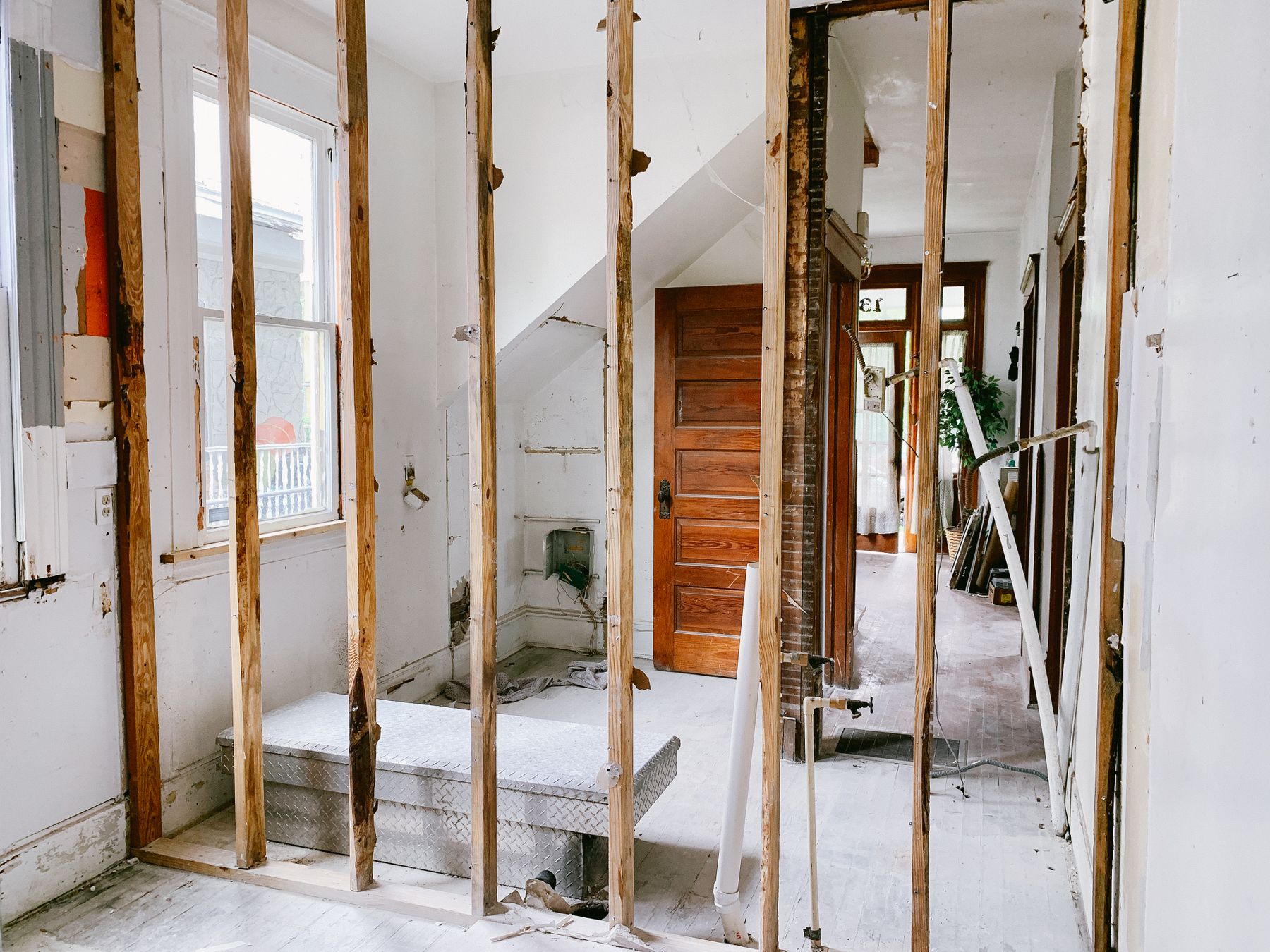
Older contractor sites often rank for dozens of service and town pages, roofing in Newmarket, electrician in Vaughan, that look thin but bring in real jobs. We keep and strengthen those pages instead of collapsing them into one services page, and replace stock photos with your actual projects, licence details and service area so a homeowner trusts you before calling.

Medical and aesthetics

Clinic sites build up years of treatment pages that rank for procedure searches. A redesign keeps those URLs and their substance, then reworks copy so it stays within the advertising standards of the relevant Ontario regulatory college: no testimonials where they are not allowed, no promised outcomes. Booking moves front and centre, with consultation requests routed straight to the front desk.

Real estate and development

Builder and brokerage sites carry past project pages, sold listings and neighbourhood guides that still attract links and searches long after a project sells out. We archive or redirect them carefully rather than deleting them, keep the community and area pages that rank, and design current projects around registration and showing requests so interest turns into a list you can sell to.

Professional services

Law, accounting and financial firms often rank for detailed articles written years ago by partners. Those posts carry authority, so we keep them, update anything that is out of date and link them to the practice area pages that win clients. The redesign itself focuses on credibility: real people, clear credentials, plain explanations and a consultation request that is easy to find.

The migration and the makeover

Every part of a redesign, including the parts no one sees.

Full site and search audit

Every URL crawled and scored by traffic, rankings, links and conversions, so decisions about what stays are based on data.

Complete redirect map

Old address to new address for every page, image and file that matters, tested against the live site before and after launch.

Conversion-led redesign

New layouts built around the questions your buyers ask before they call, with proof, pricing context and a clear next step on every page.

Content carried and improved

Ranking pages keep their topic and substance while copy, structure and visuals get better. Nothing valuable is rewritten blind.

Platform move if needed

From Wix, Squarespace, an old WordPress theme or a custom build to a faster setup your team can actually edit.

Post-launch monitoring

Daily Search Console checks, ranking comparisons against the benchmark and quick fixes for anything that slips.

From audit to settled launch

A redesign in four stages, with the risky step planned first.

  1. Weeks 1 to 2

    Benchmark and audit

    We crawl the current site, pull analytics, Search Console and backlink data, and mark every page as keep, improve, merge or retire.

  2. Weeks 2 to 4

    Structure, copy and redirect map

    New sitemap and page plan, copy for each page, and the redirect map finished before design is signed off.

  3. Weeks 4 to 8

    Design and build on staging

    The new site is built on a private, search-blocked staging address, with forms, tracking and integrations set up and tested.

  4. Launch and 30 days after

    Migrate and watch

    Redirects go live with the site, blocking is removed, sitemaps are submitted and we monitor indexing, rankings and enquiries daily.

What you hold at the end

A new website, plus the records that prove nothing was lost.

  • Pre-redesign benchmark report

    Traffic, rankings, indexed pages, backlinks and conversions by page, captured before any change.

  • URL inventory and decisions

    Every existing page with its keep, improve, merge or retire decision and the reason.

  • Redirect map

    The full 301 mapping, tested, kept on file for future changes.

  • New sitemap and page plan

    Structure built around your money services, locations and buyer questions.

  • Redesigned website

    Custom design, mobile first, built on a platform in your name with an editor your team can use.

  • Tracking setup

    Analytics, Search Console, form and call tracking carried over so history stays comparable.

  • 30-day post-launch report

    Rankings, indexing and enquiries against the benchmark, with every issue found and fixed.

  • Editor training

    A recorded walkthrough of how to update pages, projects and posts.

FAQ

Website Redesign, your questions answered.

Straight answers on contracts, pricing, ownership and how we work.

Ask us on a call
How do I know if my website needs a redesign?+

Redesign when the site no longer matches the business or stops turning visitors into enquiries. Common signs: it is slow or clumsy on phones, you cannot update it without a developer, the services or brand have changed, or Google sends traffic that rarely converts. If the structure is sound and only a few pages underperform, targeted fixes may be enough. A short audit tells you which.

How long does a website redesign take?+

For most service businesses, eight to twelve weeks from audit to launch, plus about a month of close monitoring afterwards. Larger sites with hundreds of pages, a platform change or complex integrations take longer. The schedule depends most on how quickly content and designs are reviewed. We agree a launch window at the start and avoid launching during your busiest season.

Can I keep my domain and URLs during a redesign?+

Yes, and keeping the domain is strongly recommended. Where an existing URL is clean and ranks, we keep it exactly as it is. Where a URL has to change, for example to fix a messy structure, it gets a permanent redirect to its new address. Your domain stays registered in your name throughout, and so does the hosting account.

What is the difference between a website redesign and a new website?+

A redesign replaces an existing site that has search history worth protecting, so the work includes auditing, redirect mapping and post-launch monitoring. A new website starts from a blank slate, typically for a new business, a new brand or a site with almost no traffic. Capture Marketing offers both, and the audit makes clear which one you need.

Should I change platforms when I redesign?+

Only if the current platform is holding you back. Moving makes sense when the site is slow, hard to edit, insecure or cannot connect to your CRM and booking tools. If your WordPress site is simply badly themed, a redesign on WordPress is often fine. A platform change adds migration work, so it should be a deliberate choice, not a default.

Will you rewrite all the content on my site?+

We rewrite where it helps and protect what ranks. Pages that bring in traffic keep their topic and core substance while we improve clarity, structure and proof. Weak or outdated pages get new copy based on interviews with you and research into what buyers search. You review and approve every page before launch, so nothing goes live that you have not seen.

See which pages your sitecannot afford to lose.

Book a 30-minute strategy call with a strategist and an engineer. You leave with a diagnosis of what is holding growth back, whether or not we work together.